


Da Hong Pao 'Big Red Robe'
If you are starting to take tea seriously, or simply want to taste your way into something new, a Wuyi rock oolong belongs on your list, and Da Hong Pao is the one to start with. It is perhaps the most famous rock oolong of all.
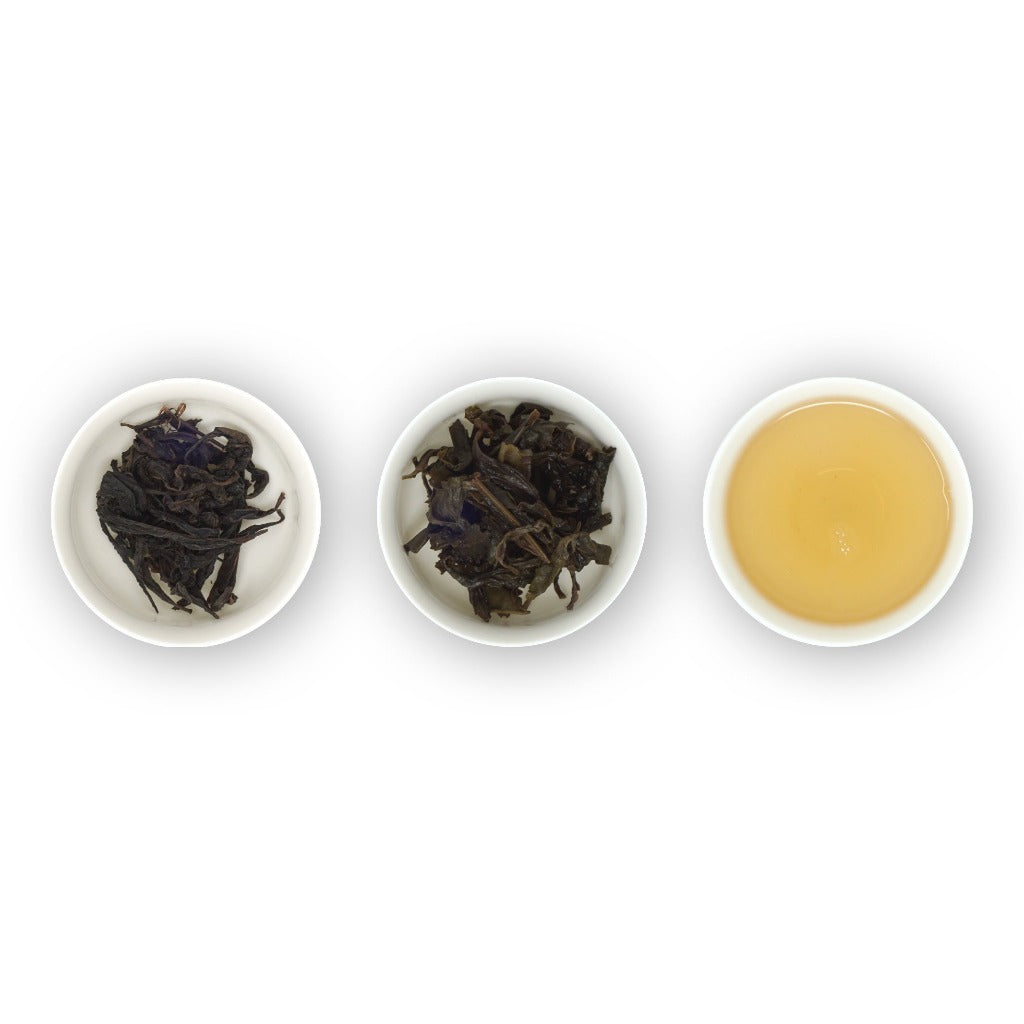
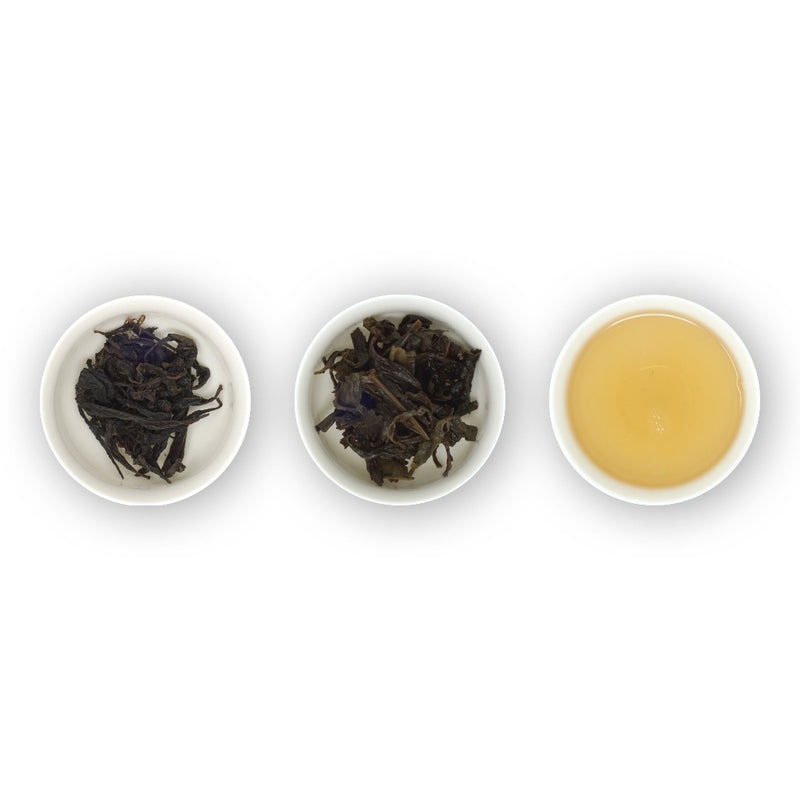
Oolong is the great in-between tea, partially oxidised, sitting between green and black; if it is new to you, my guide to the types of tea has the fuller picture. A rock oolong, or yancha, is a particular kind: tea grown among the cliffs and crags of the Wuyi Mountains in Fujian, China, a UNESCO World Heritage Site. The mineral-rich rock and the way these teas are charcoal-roasted give them a character you find nowhere else: dark and rich, with the distinctive damp-stone minerality that tea people call petrichor, the smell of rain on warm rock. Expect a dry, complex cup with notes of dark fruit, a hint of chocolate and a subtly floral finish.
Then there is the name. Da Hong Pao means "Big Red Robe," and it comes with a legend that has as many versions as there are tellers. The thread they share: someone dear to the emperor falls gravely ill and is restored to health by this very tea, and in gratitude the emperor's own red robes are draped over the bushes that saved them. The story is almost certainly embellished, but stand in front of those bushes and you understand the reverence.
Because the original mother bushes, just six of them, still clinging to a Wuyi cliff and thought to be around 350 years old, are now so treasured that they are protected by the state and no longer picked at all. Tea from their final harvests reached well over a million dollars a kilogram at auction. This, I should be clear, is not that tea: like almost all the Da Hong Pao you can actually buy, it is a loose-leaf rock oolong grown from their descendants in the same rocky Wuyi tradition. Which is rather the point; it means you can taste what all the fuss is about.
It is a proper tea, so there is caffeine in it, and it is best enjoyed without milk. Like all good rock oolongs, it will give you several infusions from the same leaves, each one a little different, so do not stop at one.
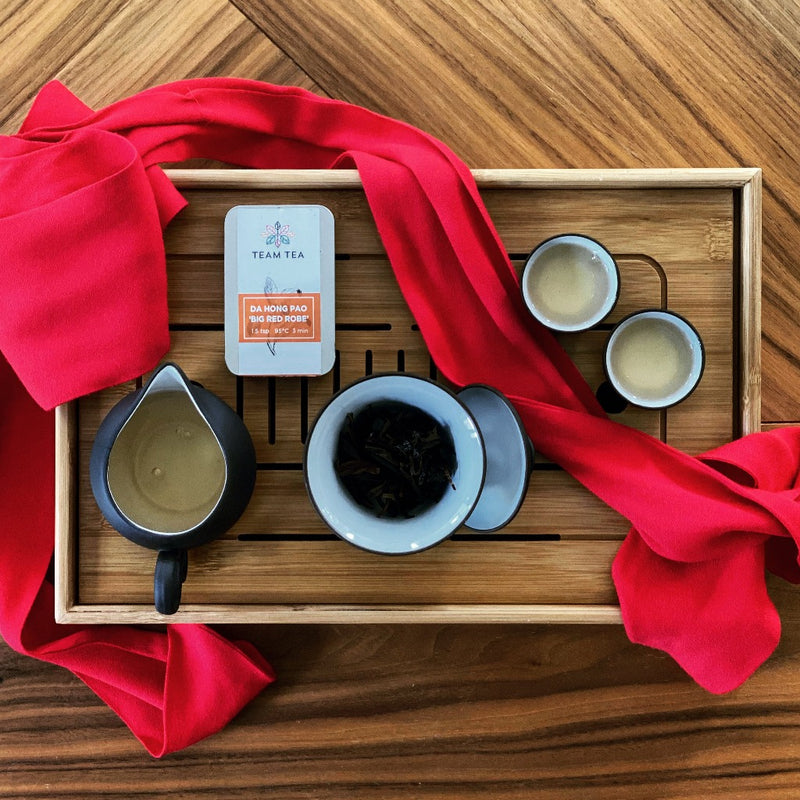
Brew at 95°C for around 3 minutes, using a generous teaspoon and a half.
Ingredients || Oolong Tea
Warning, packed in an environment that contains nuts
Caffeine || Yes
Tasting Notes || Dark, rich and roasted, with mineral 'petrichor', dark fruit, chocolate and a floral finish
Brewing Notes || 1.5 teaspoon per cup, 95ºC, brew for 3 minutes (good for several infusions)