



Earl Grey
Here is something that surprises people: Earl Grey is not a fixed recipe, it is a style. The one thing every Earl Grey shares is bergamot, a fragrant citrus fruit from southern Italy, used as an oil to scent the tea. Everything else, the base tea, the balance, any extra flavours, is left to the blender. So no two are quite the same.
Mine is a loose-leaf Earl Grey made to be rich and creamy. I use a good Ceylon black tea as the base, traditional bergamot, and a hint of vanilla, which gives it a rounded, almost velvety quality that I find genuinely moreish. It takes milk well, being on the creamier side, but it is equally lovely without; I would try a sip without first, since it is always easier to add milk than to take it away. And yes, it is a black tea, so there is caffeine in it.
As for how Earl Grey came to exist, there are several competing stories, and we will honestly never know for certain. A few years ago I met a descendant of Earl Grey, who told me the family version: a cook in the Grey household, fond of experimenting, one day added bergamot to the tea. The Earl was so taken with it that when he later moved to London for parliamentary business, he had the recipe sent to Twinings to blend for him. Twinings went on to sell it more widely, always calling it Earl Grey's blend, and the name stuck. True or not, I rather love it.
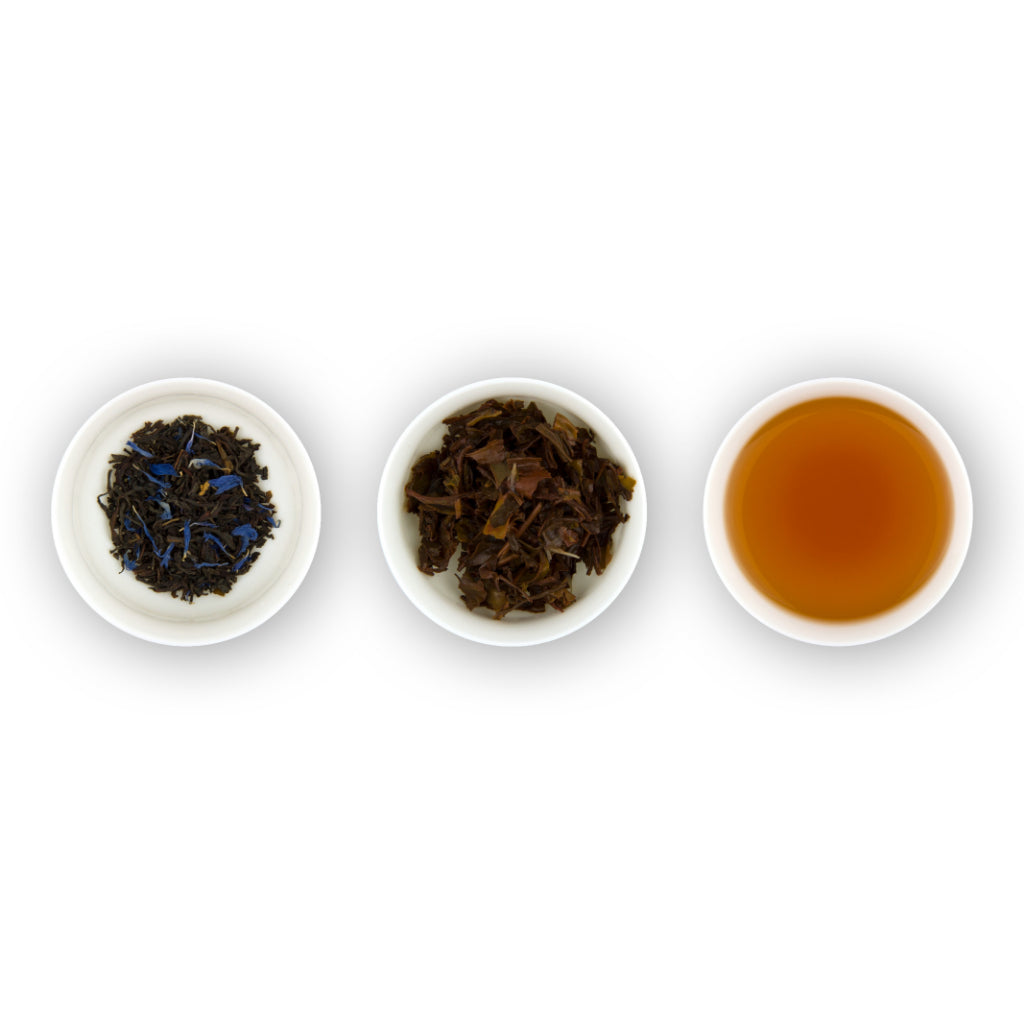
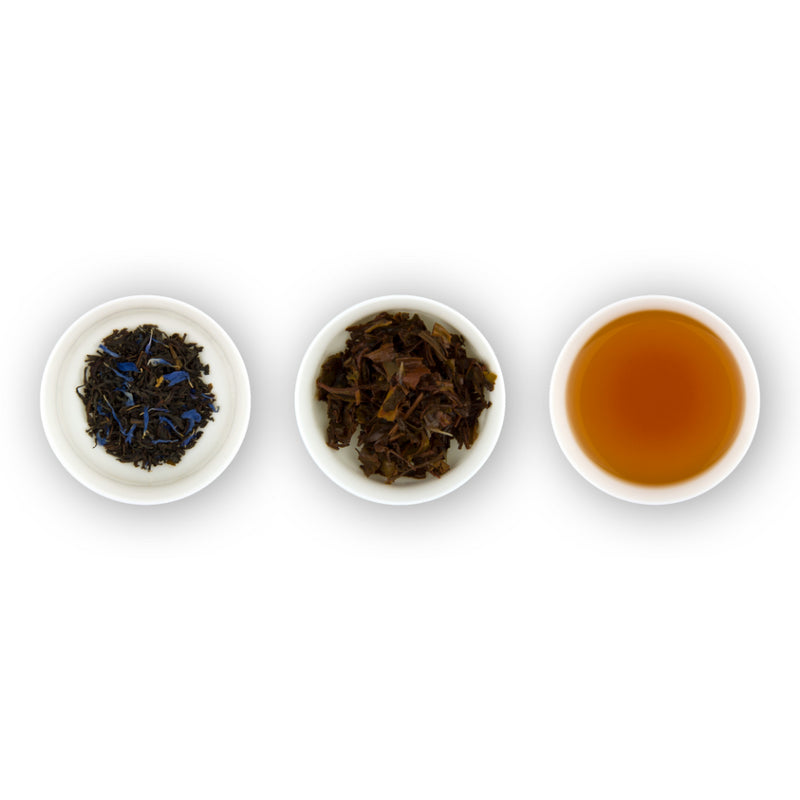
One last detail, in case you wondered: the little blue petals are cornflower. They are pretty but essentially flavourless; they have traditionally been added to Earl Grey so you can spot the flavoured tea at a glance.
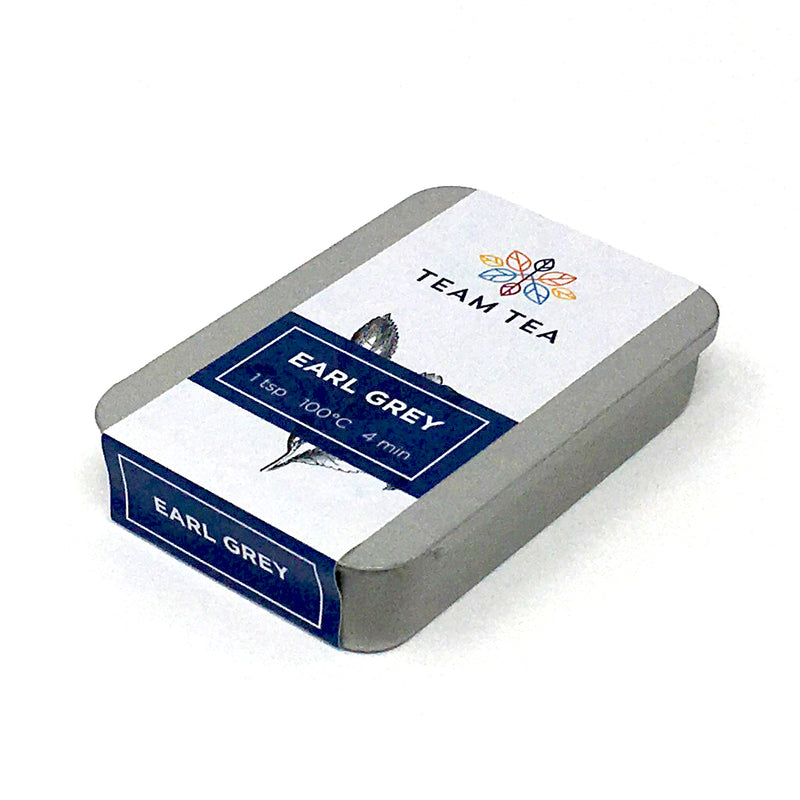
Brew at 100°C for 3 minutes, with or without milk.
Ingredients || Black Tea, Cornflower petals, Natural flavour
Warning, packed in an environment that contains nuts
Caffeine || Yes
Tasting Notes || Creamy and rounded, with fragrant bergamot and a hint of vanilla
Brewing Notes || 1 teaspoon per cup, 100ºC, brew for 3 minutes.